
SHARE THIS:
Search for How Anti-Drone Systems Are Driving C-UAS Market Growth in the web..


Found: 15.06.2026
How Anti-Drone Systems Are Driving C-UAS Market Growth
The nature of aerial warfare is undergoing a profound transformation. Once considered niche battlefield assets, unmanned aerial systems (UAS) have become central components of modern military operations. From reconnaissance and intelligence gathering to precision strikes and swarm attacks, drones are increasingly shaping the outcome of conflicts around the world. As their use expands, so does the urgency of developing effective defenses against them.
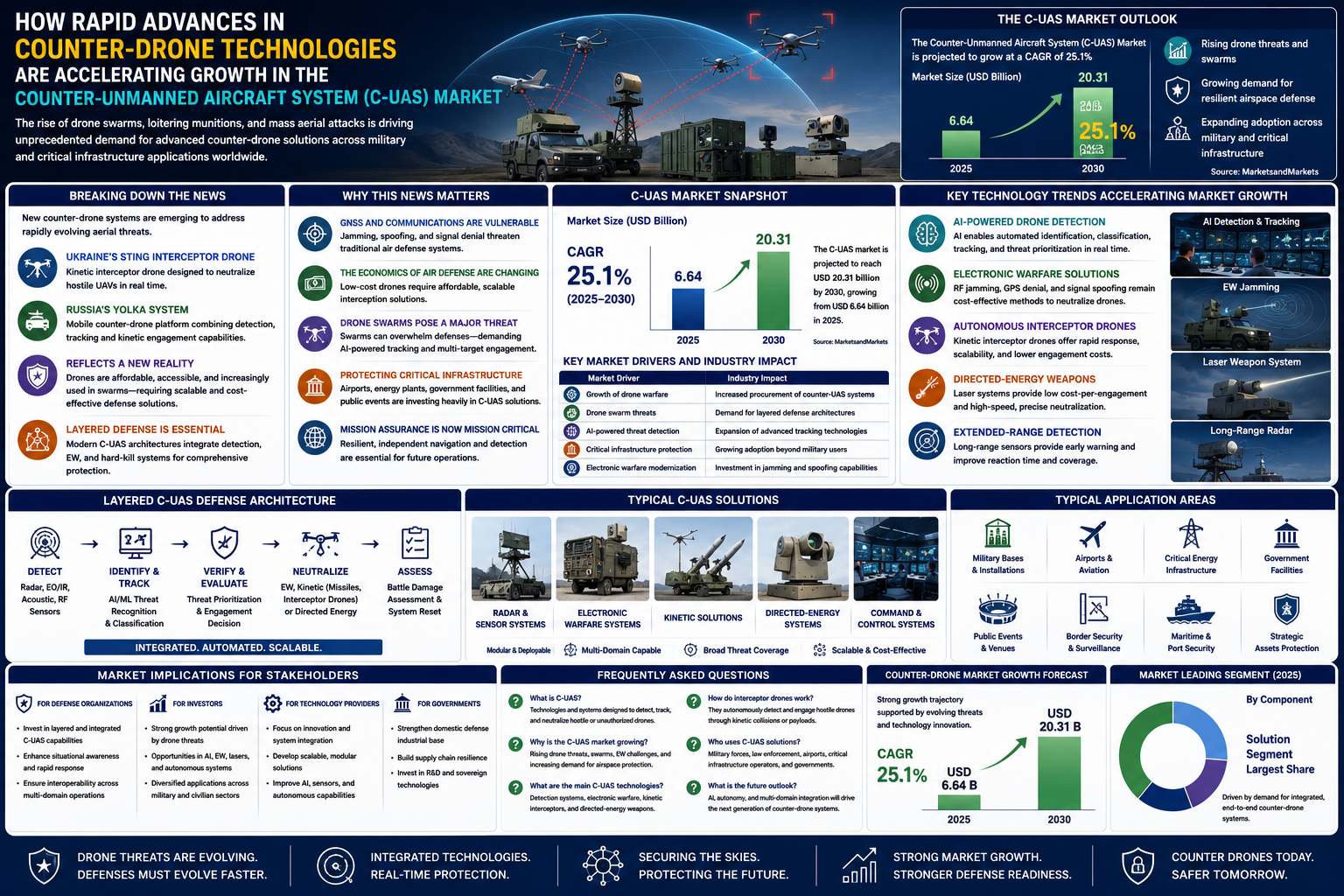
A recent report highlighting the growing traction of counter-drone technologies illustrates how rapidly military priorities are evolving. The emergence of Ukraine’s Sting interceptor drone and Russia’s Yolka system demonstrates two competing approaches to kinetic drone interception, both designed to address a common challenge: how to stop increasingly sophisticated and inexpensive unmanned threats at scale.
The growing prevalence of drone swarms, loitering munitions, and mass aerial attacks is forcing military organizations to rethink traditional air defense architectures. Instead of relying solely on conventional missile defense systems, armed forces are increasingly investing in layered counter-drone capabilities that combine detection, tracking, electronic warfare, and hard-kill interception technologies.
This shift is creating significant momentum across the Counter-Unmanned Aircraft System (C-UAS) Market. As governments, critical infrastructure operators, and homeland security agencies seek effective protection against evolving aerial threats, demand for advanced counter-drone solutions is accelerating worldwide.
Download PDF Brochure: https://www.marketsandmarkets.com/pdfdownloadNew.asp?id=4197284
read more..
Search for How Anti-Drone Systems Are Driving C-UAS Market Growth in the web..
Latest links


Website Info
Category: Aerospace & DefenceFound: 15.06.2026
Rate!!
Please write a comment: