
SHARE THIS:
Search for How Artificial Intelligence Is Revolutionizing Electronic Warfare in the web..






Found: 17.06.2026
How Artificial Intelligence Is Revolutionizing Electronic Warfare
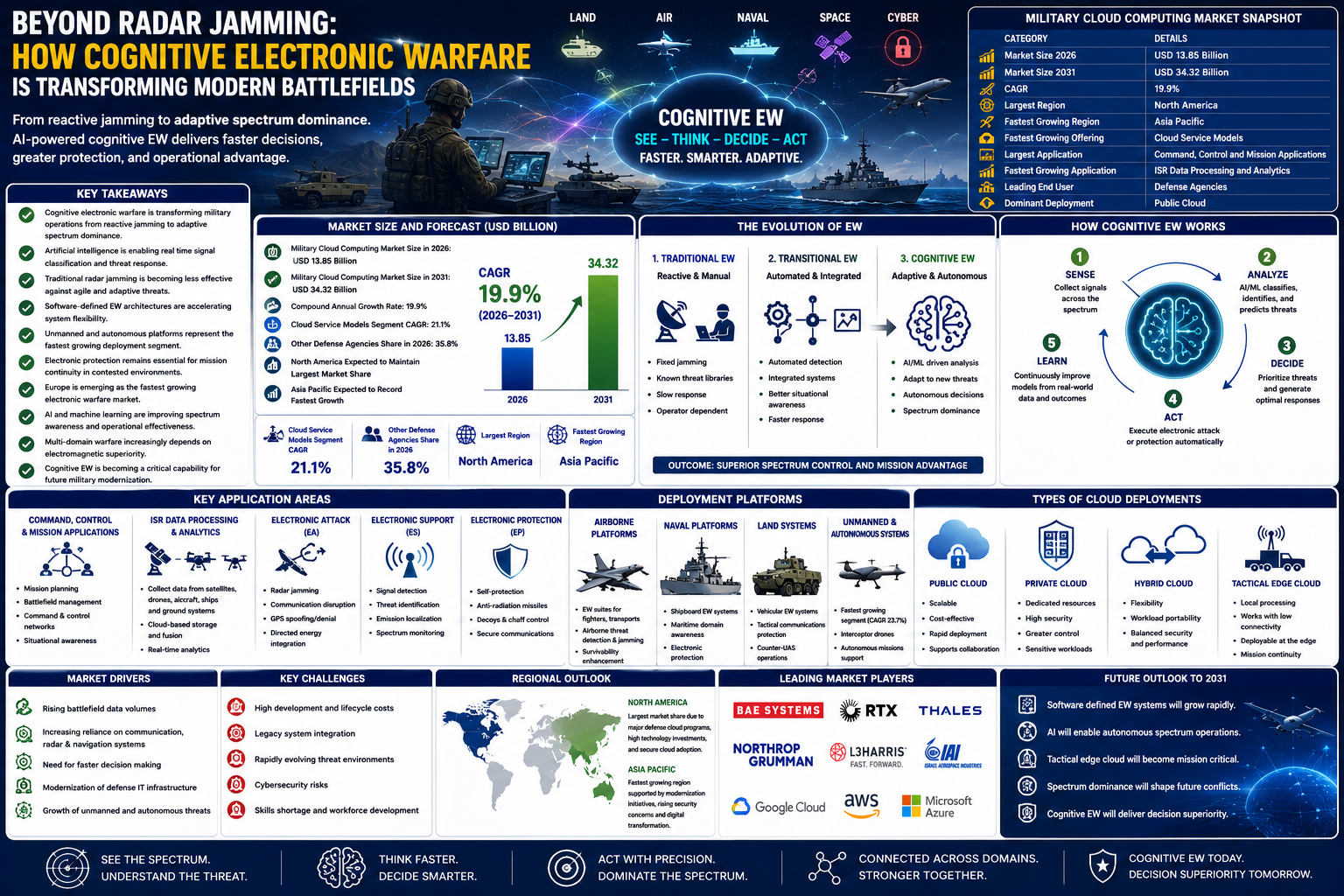
Modern warfare is no longer determined solely by kinetic capabilities. Control of the electromagnetic spectrum has become one of the most decisive factors in military success. Communication networks, radar systems, navigation technologies, precision weapons, unmanned platforms, and command networks all depend on uninterrupted access to electromagnetic signals.
For decades, electronic warfare primarily focused on radar jamming and signal disruption. These methods proved effective against traditional threats, but modern battlefields have become far more complex. Adversaries now deploy agile radar systems, adaptive communication networks, autonomous drones, sophisticated electronic attack systems, and rapidly evolving spectrum tactics.
As threats become more dynamic, military organizations require electronic warfare capabilities that can learn, adapt, and respond in real time. This requirement is driving the emergence of cognitive electronic warfare.
The Electronic Warfare Market is estimated at USD 32.35 billion in 2026 and is projected to reach USD 64.66 billion by 2031 at a CAGR of 14.9%. Growth is being fueled by increasing reliance on communication, radar, navigation, and targeting systems in modern military operations. At the center of this transformation is the shift from conventional jamming techniques toward intelligent and adaptive cognitive electronic warfare systems.
Download PDF Brochure: https://www.marketsandmarkets.com/pdfdownloadNew.asp?id=1301
read more..
Search for How Artificial Intelligence Is Revolutionizing Electronic Warfare in the web..
Latest links
Website Info
Category: Aerospace & DefenceFound: 17.06.2026
Rate!!
Please write a comment: